
Friday, January 9, 2026
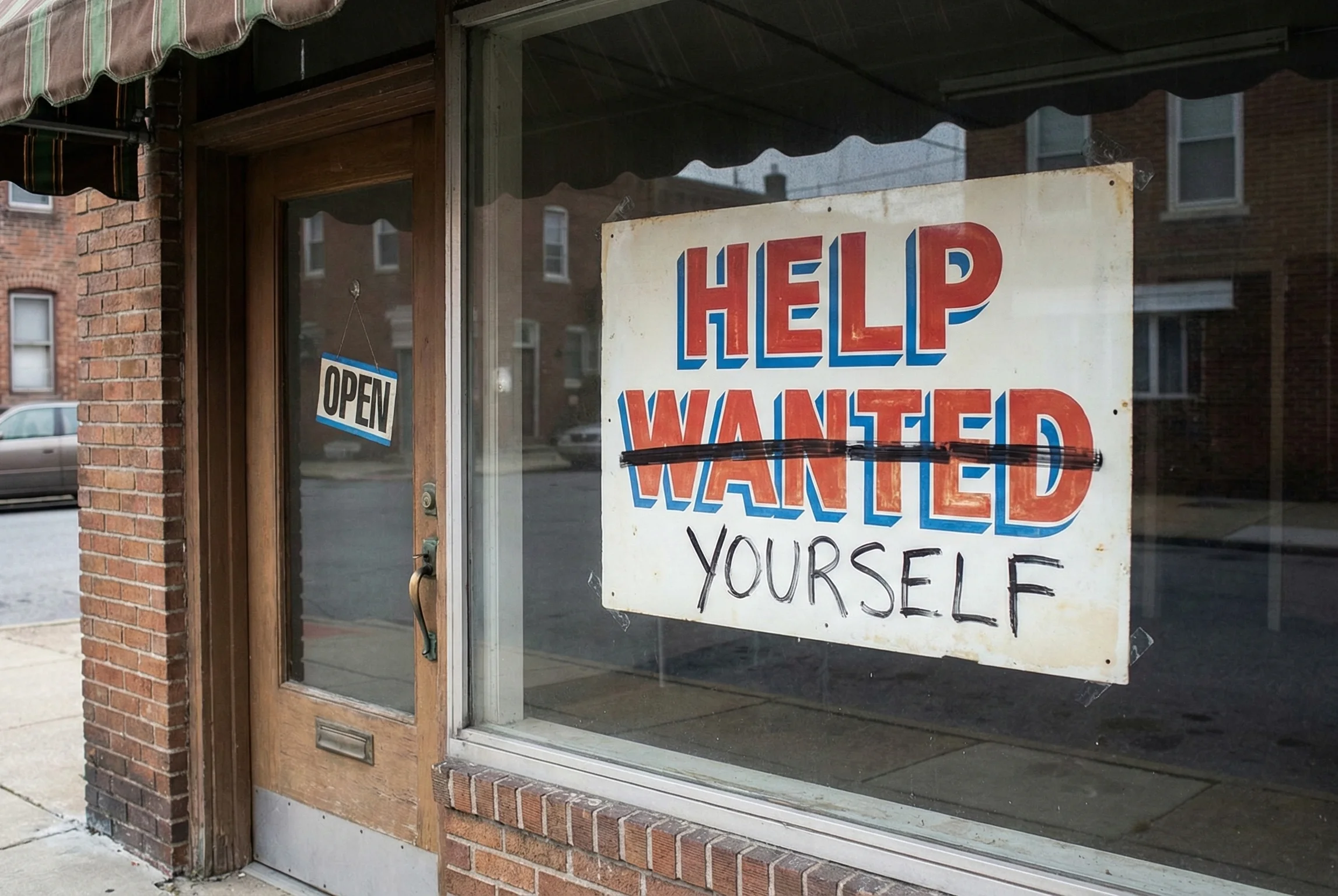
The Death of Traditional Hiring: Nobody's Coming for You
The front door is closing. Build your own entrance.
"There's nobody coming for you. There's no training program. You have to make that for yourself."
That's Bob Sternfels, Global Managing Partner of McKinsey, speaking on a recent All-In Podcast episode recorded at CES 2026. It's a stark message, but it captures something real about how the hiring landscape has shifted.
The traditional path—submit resume, get screened, interview, enter training program, become productive employee—is breaking down. Not because companies are cruel. Because the economics have changed.
The Calculus Has Shifted
Sternfels made another observation that's been widely quoted: "Hiring somebody and training them is going to take longer than building an agent."
There's truth in that, but it misses the deeper point.
I've built plenty of agents. I've also trained people and evaluated candidates. Could I say it's faster to build an agent for many tasks? Absolutely. But that's not the right question.
The right question is: who do you need on your team now?
You need people who are confident and capable enough to build and use agents themselves. Agents will never replace people entirely—they augment us. What's actually happening is that everyone is becoming a leader, a manager of their own team of agents performing actions on their behalf.
This is the shift that matters. Not "agents vs. humans." It's "humans who can lead agents vs. humans who can't."
The Symbiotic Relationship
Here's what gets lost in the fear-driven narratives about AI and jobs: no action gets taken by any agent where the responsibility is on the agent. The responsibility always flows up to the human.
The human is the trainer. The one who knows what questions to ask. The one with creativity, experience, and common sense. The one who interfaces with the real world.
This relationship is symbiotic. It requires specific tools and training to operate correctly. And that's exactly what's missing from the traditional hiring pipeline.
Companies built training programs for a world where junior employees did junior work and slowly leveled up. That world is compressing. The junior work is being absorbed by AI. What remains is the work that requires judgment, creativity, and human accountability.
So when companies say "we need people who can hit the ground running," what they increasingly mean is "we need people who already know how to work with AI teammates."
The 200 Resume Problem
Jason Calacanis described the current job market bluntly: "Young people are graduating and they're sending out 100, 200 resumes, getting no job offers. We were sitting here 10 years ago. Every graduate from a decent school was like, 'I have an Uber, a Coinbase and a Google offer. Which one should I take for 150k?' And those offers just aren't there."
If you've sent 200 resumes with no responses, I'd ask you this: how much time did you spend writing and sending those applications?
If you had all of that time back, what would you have done differently?
How would you have taken all that time and energy and turned it into something useful—for yourself, for a project, for someone else? Something that proved you can execute, create, and bring things into the world that didn't previously exist?
That's the mindset shift. It's not about convincing people you can do things. It's about doing them.
Building Your Portfolio
The advice I hear often is "do spec work for companies—redesign their landing page, email the CEO." There's something to that approach, but I think there are better alternatives.
You don't have to do work for other companies. You can:
- Volunteer for organizations that need help and will give you real problems to solve
- Build your own projects that solve problems you actually have
- Do freelance work for family and friends who need something built
- Solve problems in public and document what you learn
There's an unlimited amount of work available to build a portfolio in any area you're interested in. And this isn't limited to software and engineering.
Are you interested in painting? Use AI tools to accelerate your learning, then go into the real world and paint. Show people what you're capable of. Demonstrate how quickly you can iterate and improve.
Are you interested in writing? Start a newsletter. Publish consistently. Build a body of work.
Are you interested in design? Redesign things that bother you. Document your process. Share the before and after.
The specific field doesn't matter. What matters is that you're executing—making things real—and then sharing those stories with people.
What Companies Actually Want
Here's what I've observed in hiring conversations over the years:
The best signal isn't credentials. It's demonstrated work.
When someone shows up with a portfolio of things they've built, problems they've solved, projects they've shipped—that tells you more than any resume line item. It shows initiative. It shows they can finish things. It shows they don't wait for permission.
And increasingly, it shows whether they know how to leverage AI tools effectively. Can they orchestrate agents? Can they use AI to multiply their output? Can they work at the pace that's becoming standard?
These are the questions that matter now.
The Real Opportunity
The closing of traditional pathways isn't just a problem. It's an opportunity—if you see it correctly.
When the front door closes, the people who find side entrances have less competition. When training programs disappear, the people who train themselves stand out. When credentials matter less, demonstrated capability matters more.
This connects directly to the new learning paradigm: the half-life of skills is compressing, but the barrier to acquiring new skills has never been lower. The tools are accessible. The knowledge is available. The only question is whether you'll use the time you have to build something real.
The Pure Inference Perspective
This is central to what we're building at Pure Inference.
We sit at the intersection of consulting, software, and AI. What we see consistently: the people who thrive aren't waiting for training programs or permission. They're building. They're shipping. They're learning in public and demonstrating what they can do.
The question isn't "are you qualified?" It's "what have you shipped?"
That's true whether you're looking for a job, starting a company, or trying to grow in your current role. Execution is the credential now.
The Mindset Shift
If you take one thing from this, let it be this:
Stop trying to convince people you can do things. Start doing them.
The time you'd spend tailoring resumes, crafting cover letters, waiting for responses—redirect that energy into building something. Solve a problem. Create something that didn't exist before. Then share the story.
Good things come when you have stories to tell. Real stories, about real work, with real results.
Nobody's coming to train you. Nobody's coming to give you permission. But that's not a tragedy. That's freedom.
What are you going to build with it?
Book & App — Launching September 2026
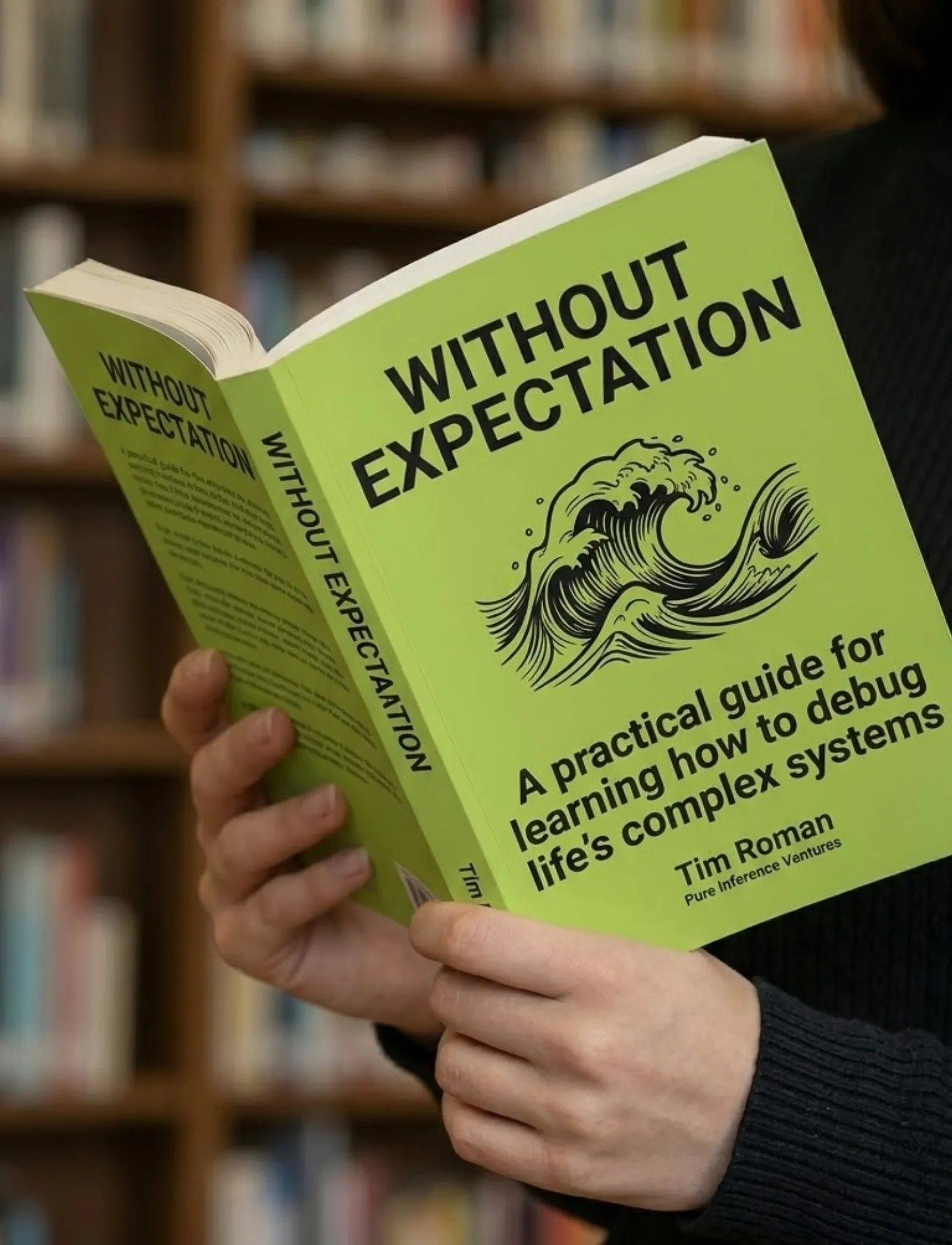
Without Expectation
Debugging Life's Complex Systems
The same systematic approach engineers use to debug complex systems — applied to the complex system of your life. Learn to observe without judgment, distinguish symptoms from root causes, and run small experiments that compound into massive change.
- 23 chapters
- AI prompt templates
- iOS companion app
- Print, digital & audio
If you liked this, you might also like...
The New Learning Paradigm: Why the Half-Life of Skills is Your Biggest Opportunity
The half-life of acquired skills is decreasing rapidly. This isn't a crisis—it's the greatest democratization of opportunity in a generation.

Your Moat Is Your Domain
AI is democratizing technical ability at unprecedented speed. The new competitive advantage isn't coding skill—it's understanding what to build and why it matters.