

Friday, February 6, 2026
Diffusion Is the Strategy
The opportunity isn't better models. It's broader adoption.
There's a pattern from the Industrial Revolution worth understanding right now.
Diego Komen, an economist at Dartmouth, studied which countries captured the most economic value during that era. Britain invented the steam engine, the spinning jenny, the power loom. But the countries that ultimately won weren't always the ones that created the breakthroughs — they were the ones that adopted the technology intensely and built on top of it. Germany, the United States, Japan took what existed, deployed it into their industries, and out-competed through application.
Satya Nadella cited this research at Davos 2026: "Any country that brought the latest technology into their country, and then did value-add technology on top of it — that's what wins. Don't reinvent the wheel. Bring the latest and build on top of it."
The pattern repeats every technological wave. Electricity. Computing. The internet. Mobile. The creators get the glory. The diffusers get the GDP.
The Gap Between Capability and Use
The AI labs are building the most powerful models in human history. Capabilities that would have seemed like science fiction five years ago are now available through APIs that cost fractions of a cent per call.
Meanwhile, a fabrication shop in Ohio is tracking time with paper timesheets. A construction company in Texas is managing inspections on clipboards. A healthcare clinic in Michigan is faxing records between offices.
The technology exists. The diffusion is just beginning.
Nadella framed it well: "We have the tech. The question is, is it being used in healthcare? Is it being used in financial services? Is it being used in every sector of the economy — by large businesses, small business, public sector?"
For most sectors, the honest answer is: not yet. Not in ways that change outcomes. And that's where the opportunity is.
Why This Moment Is Different
Here's what excites me about building right now.
The long tail of software creation is economically viable for the first time. Before AI-assisted development, building software for a 50-person fabrication shop wasn't worth it. The market was too small. The development costs were too high. The economics didn't work.
Now they do.
A scheduling, time-tracking, and job costing app for small machine shops. Inspection workflow software for fab shops. Quality management systems for niche manufacturers. Each serves a market too small for traditional software economics — but AI changes the math on what's buildable.
The platform giants can build the most advanced AI in the world, but they're not going to redesign manufacturing inspection workflows for fab shops in the Midwest. That last mile of diffusion — getting AI-powered tools into industries that run on paper and tribal knowledge — requires domain expertise you can only get by being close to the work.
Adoption vs. Diffusion
There's a distinction worth making. Adoption is downloading a chatbot. Diffusion is restructuring your operations around what AI enables.
Most AI "adoption" today is casual experimentation. People use chatbots to draft emails or summarize articles. They play with image generators. It's useful, but it's not transformative.
Intense use looks different. It means redesigning workflows from scratch. Eliminating steps that existed because humans were the bottleneck. Building systems where AI handles the execution and humans handle the judgment. As I described in The 100x Solo Operator, the gap between casual users and intense users isn't incremental — it's exponential.
The same dynamic plays out at the organizational level. Companies that bolt AI onto existing processes capture marginal gains. Companies that redesign operations around AI capabilities capture structural advantages that compound over time.
One approach asks "how can AI help with what we already do?" The other asks "what would we do if we designed this from zero, knowing AI exists?" The second question is harder, but it's where the real gains are.
The Long Tail Is the Diffusion
This is what makes me optimistic about where things are headed.
Diffusion doesn't mean one giant platform reaching everyone. It means thousands of specialized tools reaching the specific industries, workflows, and frontline roles that generalized software never served.
The tablet on the shop floor wall. The four-second interaction that replaces the filing cabinet. Software designed for gloved hands. Each one a small market. Together, they represent an enormous untapped opportunity.
And here's the exciting part: AI is creating more builders every day. The barrier to becoming a builder has never been lower. Domain experts who couldn't code before can now build. People with deep industry knowledge can translate that knowledge into software without needing a computer science degree.
The bridge between AI capabilities and the industries that need them isn't a handful of elite developers. It's the machinist who learns to build his own tools. The shop floor supervisor who automates her own compliance workflows. The fabrication company owner who builds the quality system he always needed but could never afford to commission.
Building the Factories
The Industrial Revolution didn't end when the steam engine was invented. It started when someone put it in a factory.
We've built the engine. The models are powerful enough. The APIs are cheap enough. The infrastructure is accessible enough.
Now it's time to build the factories — thousands of them, each one serving a market that was never worth serving before. That's diffusion. That's where the value is. And there's never been a better time to be building.
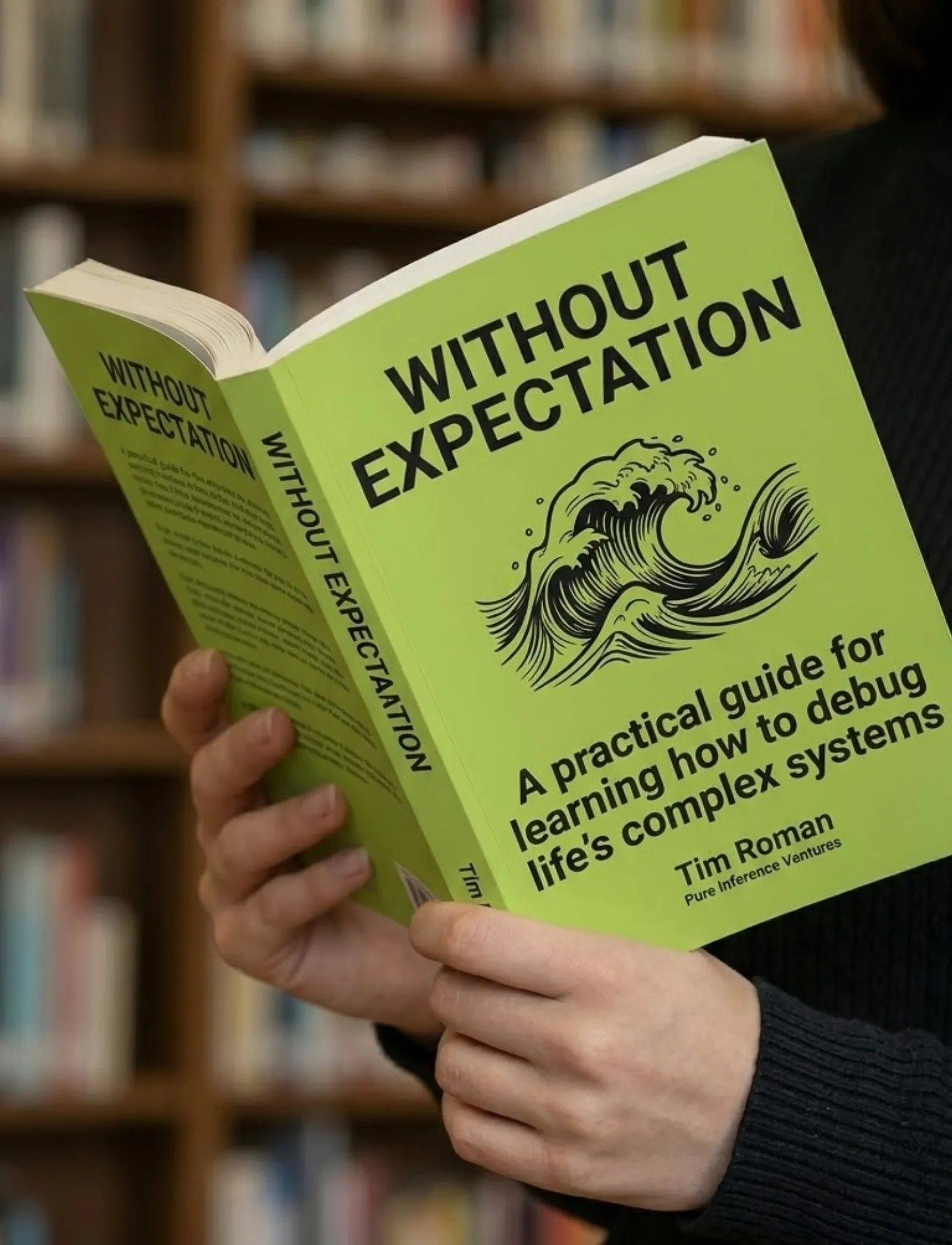
Book & App — Launching September 2026
Without Expectation
Debugging Life's Complex Systems
The same systematic approach engineers use to debug complex systems — applied to the complex system of your life. Learn to observe without judgment, distinguish symptoms from root causes, and run small experiments that compound into massive change.
- 23 chapters
- AI prompt templates
- iOS companion app
- Print, digital & audio
If you liked this, you might also like...

Bigger Than the Internet
The internet connected what existed. This creates what doesn't. That's why software's moment isn't like YouTube or podcasts — it's the long tail of creation finally becoming economically viable.

Your Moat Is Your Domain
AI is democratizing technical ability at unprecedented speed. The new competitive advantage isn't coding skill—it's understanding what to build and why it matters.